
DNA
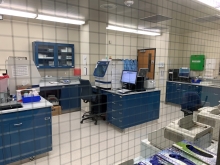
DNA Casework
The Scientific Analysis Bureau provides serology and forensic DNA analysis using the most modern DNA scientific services for the examination of crime evidence to identify or exonerate individuals. Forensic DNA analysis involves testing of biological samples left at a scene to determine a DNA profile which can then be compared to the known profile of an individual or entered into the Combined DNA Index System (CODIS). CODIS is a national database of DNA profiles used to search for a potential match. DNA analysis is offered at the Central, Southern and Northern laboratories.
Case Acceptance Guidelines
All cases submitted for DNA analysis require the DNA Supplemental Form to be completed. This information is necessary to determine CODIS eligibility and to allow the lab to focus on the most critical evidence in each case, resulting in faster turnaround times for all customers.
Permission to consume samples for testing is considered granted at the time of submission. While every effort will be made to preserve samples for future testing, consumption will occur at the discretion of the analyst. For cases involving death or attempted homicide, permission to consume will only be requested if a suspect is named at the time of submission.
Known Standards
Known standards are required in all cases involving DNA analysis. These samples—also referred to as DNA reference samples, elimination samples, buccal swabs, or blood blots—provide the necessary comparison profiles for forensic testing. A known standard must be collected from every individual associated with the case, including victims and any person who may have contributed DNA to the evidence.
Even when a DNA profile is believed to be in CODIS, a new known standard must still be collected and submitted to the laboratory. This ensures accurate comparison, maintains proper chain of custody, and meets all quality assurance requirements.
Violent Crimes
Violent Crimes involve a violent incident that results in injury (bleeding) or death. For initial evidence submissions of Violent Crimes cases, the lab will process up to 5 items of evidence per case (plus any known standards). Should more than 5 items be required for any case (complex scene, multiple victims/assailants, etc.), please contact the laboratory to discuss the case prior to submitting your request.
Sexual Assault
Sexual Assaults often include a Sex Assault Kit (SAK) collected by medical personnel and this should always be the first evidence submitted. Once the SAK has been processed, additional items of evidence may be processed as needed. If no SAK was collected, the initial evidence submission should be up to 5 items of evidence.
Property Crimes
Property Crimes involve an incident of stolen, damaged property, etc. or non-injury related persons crimes (e.g., armed robbery). For initial evidence submissions of Property Crimes cases, the lab will process 1 item of evidence per suspect in a case (plus any known standards).
Trace DNA
The following criteria must be met for trace DNA evidence submissions:
- We will accept items that are foreign to the crime scene, i.e., presumably left behind by the perpetrator(s). When foreign items are not present/available from stolen vehicles, steering wheel and gearshift swabs can be submitted.
- Elimination standards from all victims/owners, residents/drivers should be obtained and submitted with the evidence.
- Gloves and a surgical mask should be worn while collecting any trace DNA evidence. To collect, swab the evidence thoroughly with a single cotton swab that has been slightly moistened with one or two drops of water. Allow the swab to air dry or place in a swab box for drying. NOTE: Double-tipped swabs and Q-tips should not be used.
- Swabs of surfaces or items of evidence that are regularly touched/handled by multiple individuals will not routinely be processed for DNA.
Guns
- Guns and swabs from guns will only be accepted if they meet the criteria for Trace DNA Evidence (see above) and they are involved in Homicides and Attempted Homicides.
- Other crimes against people will be considered on an individual basis.
- At a minimum, the owner’s known standard or one relevant known standard must be submitted for comparison.
- Swabs from the gun will always be selected over swabs from the magazine unless specifically requested with justification in the case scenario.
- If latent print analysis develops a probative result prior to DNA testing, the request for DNA testing will be withdrawn.
- If a comparable DNA profile is developed from the first round of testing, no additional swabs from the gun will be tested without further request.
- DNA detected on an item resulting from trace DNA collection cannot be assumed to be a result of the incident. As such, processing of guns for trace DNA may be declined by the lab based on case facts, which are likely to impact the recovery of a relevant DNA profile.
Spent Cartridge Casings
The DPS Crime Lab cannot perform both DNA and Latent Print analysis on spent cartridge casings. A choice between these request types will need to be made at the time of submission.
If casings need to be swabbed prior to NIBIN or firearms analysis, please:
- Never use more than one wet swab to swab a single casing
- Use the least number of swabs to swab a group of the same caliber casings together (1-2 swabs total, if possible)
- Casings from different crime scenes or different areas of a large scene should not be swabbed together
- Any casings with apparent blood should not be swabbed as part of a group
If you are not comfortable swabbing, please submit the casings to the lab and provide information about the caliber of the casings, the location found, or contact DPS Crime Lab.
- Package casings in a manner to prevent as much movement as possible (small or folded envelope).
Bones
Bone samples may require some additional forms for submission; please see the forms section below. For missing persons and unidentified human remains, NamUs may be able to provide additional information or assistance. Visit their website at DNA | NamUs (ojp.gov) and their Investigative Support | NamUs (ojp.gov) page for regional contacts.
Hair
Hair samples are no longer pre-screened to determine if they are human or if they have adequate root material present for DNA testing. Please contact the DPS Crime Lab for more information regarding hair submissions.
Trace DNA - Also commonly referred to as touch or contact DNA, is widely believed to be the DNA from skin cells left behind when someone touches an object or individual. However, studies have shown DNA can also be left on an object in a variety of unintentional ways including coughing, sneezing, or even talking near an object. Likewise, the absence of DNA on an object is not evidence that it was not handled or possessed. As a result, DNA testing is not appropriate for certain types of evidence.
Buccal Swabs – (Pronounced “buckle”) swab(s) collected from the inner cheek of the mouth to use as a known DNA sample. Any swabs collected other than from the inner cheek are not buccal swabs. Do not use convicted offender and arrestee kits for casework submissions. DNA profiles from offender and arrestee submissions cannot be used for casework comparisons.
Combined DNA Index System (CODIS) – A national database operated by the Federal Bureau of Investigation (FBI) that stores the DNA profiles of missing persons, individuals convicted of crimes and forensic samples collected from crime scenes. For a DNA profile to be entered it must have originated from the scene of the crime and must be attributable to a perpetrator. No names or identification information is stored in CODIS, and DNA profiles cannot be referenced for comparison. However, since new DNA profiles are constantly being entered, the database is searched daily for new matches.
Deoxyribonucleic Acid (DNA) – The genetic material found in various body tissues (muscle, fetal tissue, skin, etc.) and body fluids (semen, blood, saliva, etc.). Because an individual’s DNA is the same throughout the body and different from individual-to-individual, it can be used to determine whether a biological substance may have been deposited by a specific individual.
STR DNA Analysis – STR DNA analysis is the most widely used method in crime laboratories and the results are unique to every individual (except for identical siblings). STR (Short Tandem Repeat) testing targets and copies specific locations in the DNA molecule. This testing can be performed to identify not only the gender of the biological material source but also generate a genetic profile which provides the ability to distinguish between two individuals with a considerable degree of confidence.
Y-STR DNA – Male specific DNA found in the nucleus of most cells of the body. Y-STR analysis is used to copy locations on the Y chromosome and Y-STR data can only be obtained from male individuals. This type of DNA is inherited paternally. This type of testing may be useful when samples are mixtures of male and female DNA or when there is very little DNA from a male contributor. Y-STR testing has its limitations since close male relatives will have the same Y-STR profile.
DNA Evidence Collection Class - For available dates, see Eventbrite link below
Eventbrite Link - To sign up for DNA Evidence Collection Classes
DNA Evidence Collection Presentation
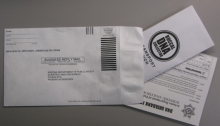
DNA Database
The Combined DNA Index System is the DNA database utilized in the United States. Created and maintained by the Federal Bureau of Investigation, it involves various levels of databases at local, state and national levels which allow searching of unknown DNA profiles against other unknown forensic profiles, convicted offender profiles, and arrestee profiles.
The Scientific Analysis Bureau serves as the State Combined DNA Index System (SDIS) Database for Arizona and uploads an average of approximately 20,000 convicted offender and arrestee samples into CODIS each year. This analysis is provided at the Central laboratory.
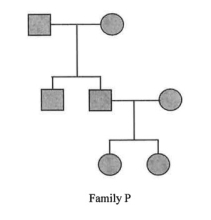
DNA Familial
Familial DNA analysis is a deliberate search of convicted offender and arrestee DNA profiles to identify candidates who are potential close biological relatives to an unknown DNA profile. A statistical comparison is completed to accomplish this, providing analysts with a list of candidates for further analysis who have a higher statistical likelihood of being relatives of the unknown profile. Once this additional analysis is complete, investigators are provided with a list of any remaining candidates for further investigation.
The Scientific Analysis Bureau provides familial DNA analysis in select cases at the Central laboratory. Arizona is the twelfth state to offer this type of testing.